





The Death of the Risk Register: Why Dynamic Risk is the New Standard for 2026
For decades, the "Risk Register" has been the centerpiece of corporate governance. It is a spreadsheet: often hundreds of rows deep: filled with subjective "Low/Medium/High" scores, updated once a quarter (if you’re lucky), and promptly forgotten until the next board meeting.
In 2026, this approach isn't just outdated; it is a fiduciary liability.
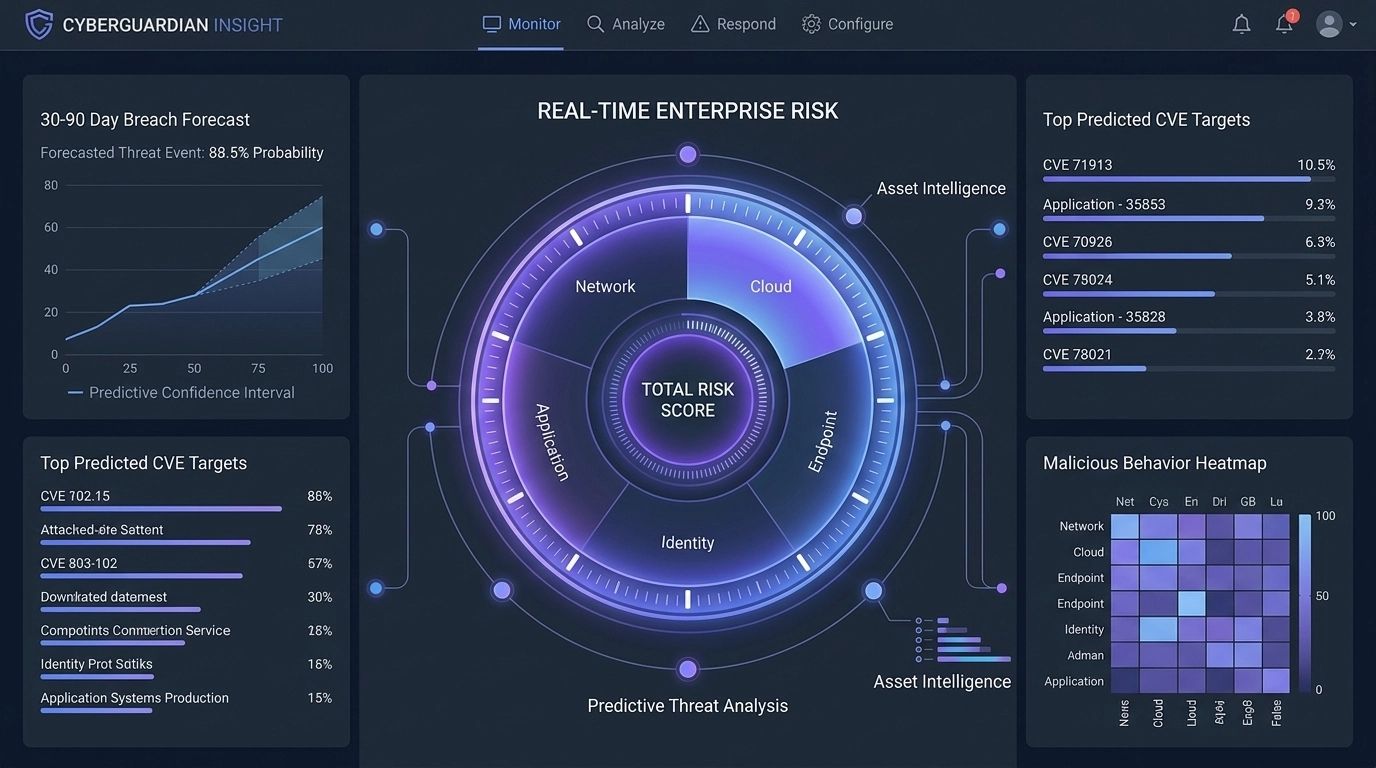
As cyber threats evolve in minutes and new vulnerabilities drop by the hour, a risk score that remains static for 90 days is effectively a lie. The era of the point-in-time assessment is dead. Taking its place is Dynamic Risk Assessment: a continuous, AI-driven engine that treats risk as a living metric, not a historical document.
The Legacy Trap: Where Risk Goes to Hide
Traditional GRC (Governance, Risk, and Compliance) was built for a world of physical assets and annual audits. In that world, risks moved slowly. In today’s hyper-connected, AI-accelerated landscape, static registers create a "perception of safety" that is disconnected from reality.
The Failure of Static Logic:
- Decay of Information: A vulnerability score calculated on Tuesday is obsolete by Friday if a new exploit script is released.
- Subjectivity vs. Evidence: Manual registers rely on the "best guess" of a risk owner. Dynamic systems rely on live telemetry.
- Siloed Data: In legacy models, "Compliance" and "Security Incidents" are separate departments. In the real world, a failed control or a minor incident is a direct signal that risk has increased.

The Pillars of a Dynamic Risk Engine
To achieve what we call "Decision Velocity," your risk posture must be shaped by four real-time inputs. If your current GRC platform isn't ingesting these automatically, you aren't managing risk: you're managing paperwork.
1. Continuous Vulnerability Context
It’s no longer enough to know you have a "Critical" vulnerability. You need to know if that vulnerability is exploitable in your specific environment and how long it has been aging. Dynamic risk engines prioritize technical risks based on business value, not just CVSS scores.
2. Live Threat Intelligence
A risk score should spike the moment a threat actor targets your industry or region. By integrating live threat feeds, enterprises can shift from reactive patching to proactive defense, predicting potential breaches 30-90 days in advance.
3. Automated Control Effectiveness
Compliance is the "proof" of your security. If a critical control (like MFA or endpoint encryption) fails, your residual risk should reflect that failure instantly. This turns compliance from a "checkbox exercise" into a real-time security signal.
4. Incident Correlation
Every minor incident: even a blocked phishing attempt: is data. A dynamic engine uses these incidents to retune risk scores, identifying patterns that a human analyst might miss across thousands of logs.
The Math of Modern Security: The Observeri Formula
At Observeri, we have moved away from abstract "heat maps" toward a rigorous, data-driven calculation. To provide a narrative that the CFO and CEO can actually use for budgeting, we quantify risk using a standardized logic:

Residual Risk = Asset Criticality x (Asset Risk / 100) x (1 – Control Effectiveness)
By expressing risk this way, we translate technical "scary things" into Expected Annual Loss (EAL).
- Asset Criticality: What is the financial value of this system to the business?
- Asset Risk: What is the density and exploitability of vulnerabilities on this asset?
- Control Effectiveness: Are the safeguards we paid for actually working right now?
When any variable in this equation changes: a control fails or a new exploit is discovered: the Residual Risk score moves. This is the difference between a "score" and "intelligence."
Why the C-Suite Demands Dynamic Visibility
For the CEO and CFO, the "Audit Cycle" is a bottleneck. They don't want to wait seven weeks for a risk report; they want to know the ROI of their security spend today.
By moving to a dynamic model, organizations typically see a 12-27X ROI in the first year. This isn't just from "stopping hacks"; it’s from the massive compression of audit cycles and the elimination of manual spreadsheet labor.
| Feature | Legacy GRC | Observeri AI Platform |
|---|---|---|
| Assessment Cycle | 6-8 Weeks | Real-Time / Continuous |
| Data Input | Manual Surveys | Automated Integrations |
| Risk Language | Red/Yellow/Green | Expected Annual Loss ($) |
| Focus | Checking Boxes | Predictive Resilience |
| Time-to-Value | 6-12 Months | Breakeven in 21 Days |
The Middle East Context: Speed is the New Compliance
In fast-paced hubs like Dubai and Abu Dhabi, digital transformation is moving at a rate that legacy GRC simply cannot support. With the introduction of the UAE Cyber Security Council's IA Standard v2.1, the focus has shifted from "having a policy" to "demonstrating resilience."
For UAE-based enterprises, dynamic risk isn't just a competitive advantage: it's a regulatory necessity. In a region where being "first to market" with digital services is the goal, your security must move as fast as your innovation.

Conclusion: The Cost of Inaction
In 2026, the cost of a static risk register is the cost of the breach you didn't see coming because your data was 60 days old.
The transition from manual spreadsheets to an AI-powered GRC platform isn't just a technical upgrade; it's a strategic pivot. It’s the move from being "audit-ready" to being "resilient."
At Observeri, we help you map, quantify, and automate this entire journey, turning your risk department from a cost center into a source of strategic intelligence. The risk register is dead. Long live the Risk Engine.
Ready to see your real-time risk exposure? Explore the Observeri Platform and compress your audit cycles today.
