
In the physical world, protecting a corporate headquarters is straightforward. You have fences, security guards at the main gate, and cameras watching the perimeter. You know exactly where the property ends and where the public street begins.
In the digital world, that perimeter has vanished. Your organization doesn’t just live inside a building; it lives across dozens of cloud providers, hundreds of subdomains, and thousands of interconnected APIs. This sprawling digital footprint is what security professionals call your "attack surface."
Most organizations are currently flying blind, managing only the assets they know about while leaving the "unlocked gates" of their digital property wide open for attackers. This is where External Attack Surface Management (EASM) becomes the most critical component of a modern security strategy.
What Is an "Attack Surface"? (The House Analogy)
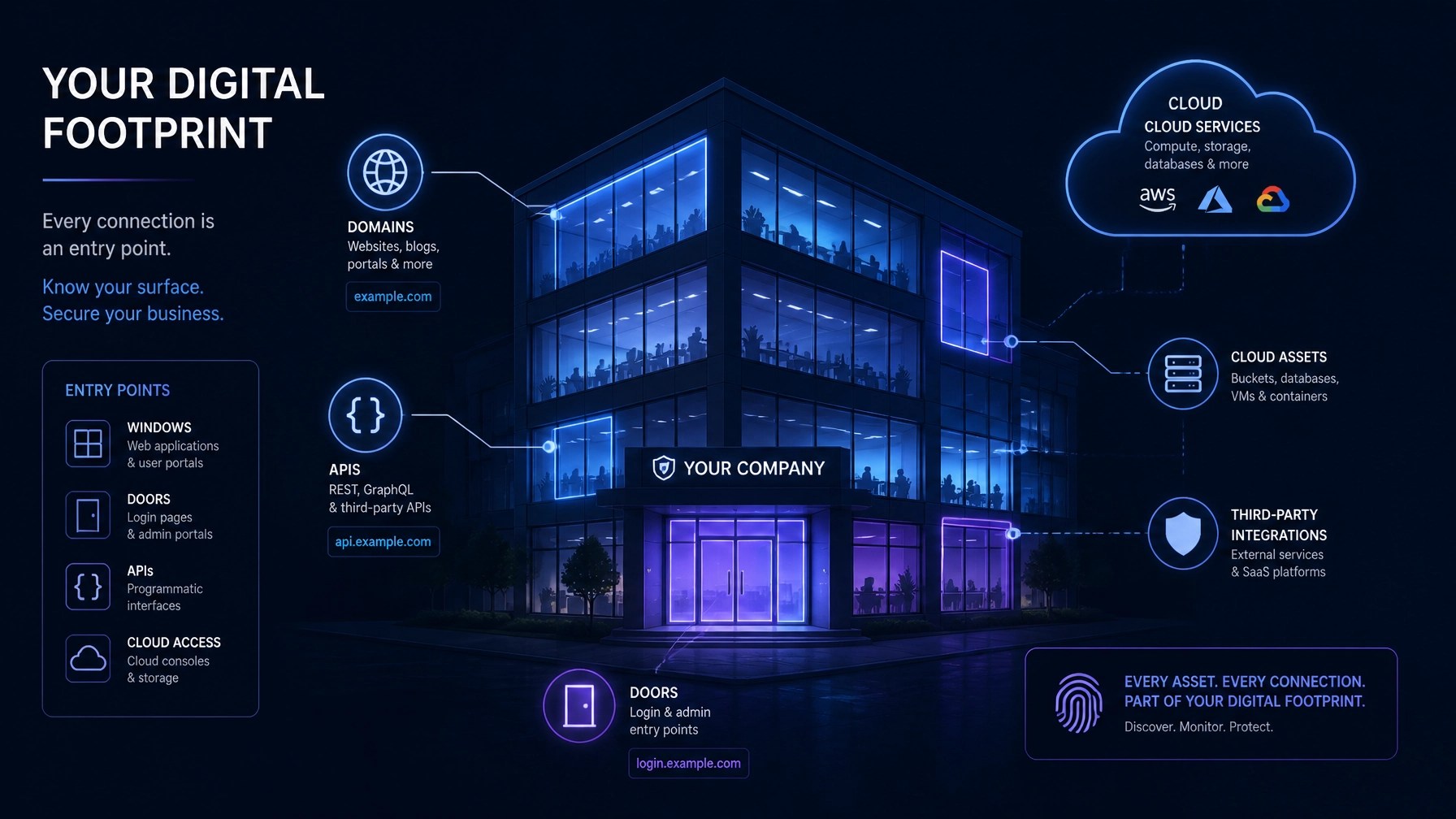
To understand External Attack Surface Management, think of your organization’s digital presence as a large house.
Your "attack surface" is every part of that house that is visible or accessible from the street. This includes the front door, the windows, the garage door, and even the small basement vent you forgot to close.
External Attack Surface Management is the practice of walking around your property every single day to check those entry points. It’s about seeing your house exactly the way a burglar does. An attacker doesn't start by kicking down the reinforced front door; they walk around the side, look for a window that was left cracked open, or check if the spare key is still under the mat.
In digital terms, your "house" consists of:
- Known Assets: Your main website, corporate email servers, and official apps.
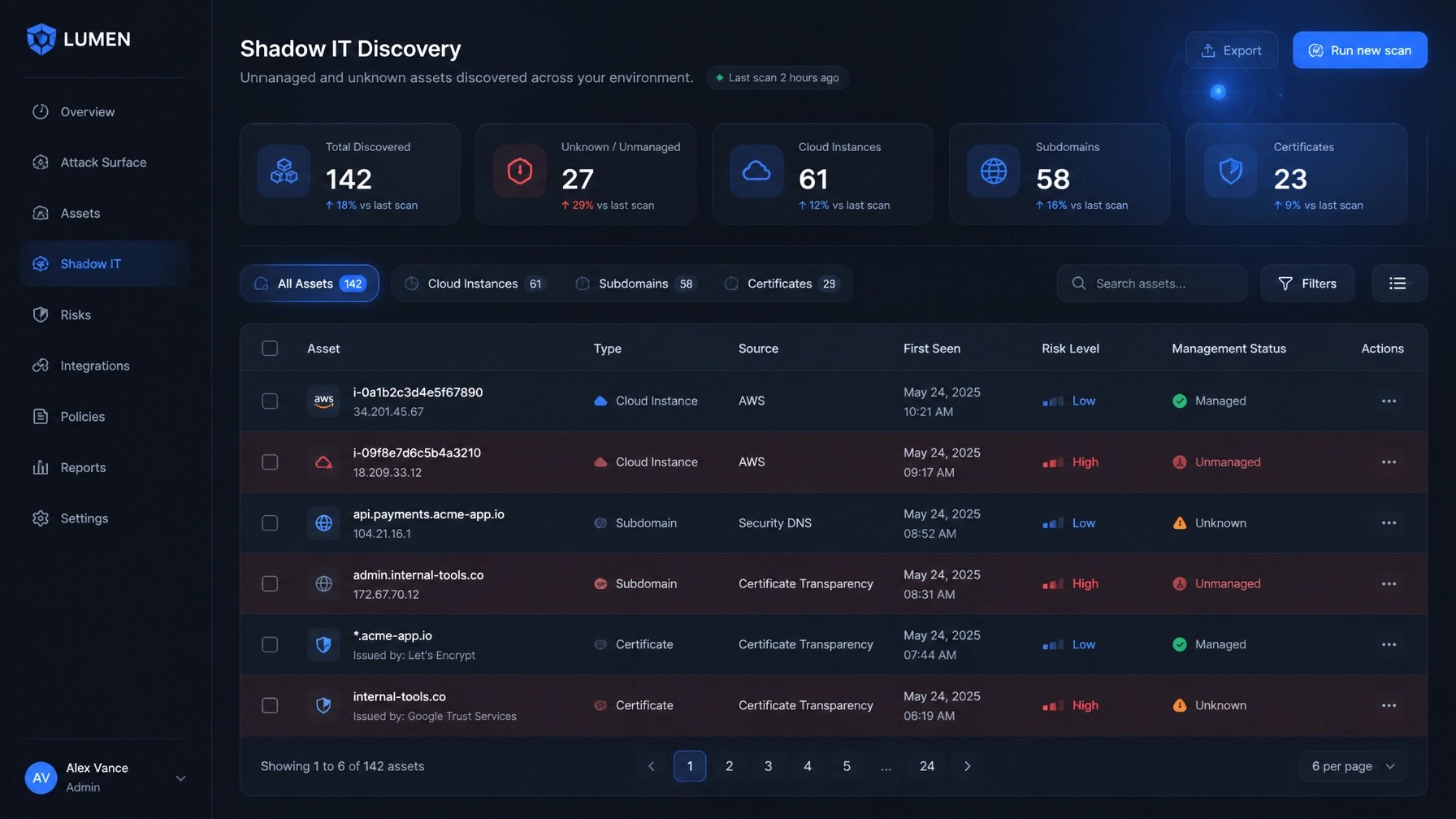
- Unknown Assets (Shadow IT): A marketing microsite created by an agency three years ago, a forgotten cloud storage bucket, or a test server a developer spun up and never deleted.
- Rogue Assets: Phishing sites or mobile apps created by criminals to look like your brand.
What is External Attack Surface Management (EASM)?
External Attack Surface Management (EASM) is the continuous process of discovering, monitoring, and securing every internet-facing asset your organization owns.
While traditional security tools focus on the "inside" (protecting the servers you know you have), EASM looks from the "outside-in." It maps your entire digital footprint from the perspective of an attacker.
At its core, EASM answers three vital questions for the C-suite:
- What do we own? (Discovery)
- Where are we vulnerable? (Analysis)
- What should we fix first? (Prioritization)
Unlike a one-time "penetration test" that provides a static report, continuous attack surface management provides a real-time, 24/7 view of your exposure.
5 Key Features of a Modern EASM Platform
To move from a reactive "hope-for-the-best" stance to a proactive defense, an EASM solution must include these five core capabilities:
1. Continuous Asset Discovery
The average enterprise has 30-40% more internet-facing assets than its IT department realizes. EASM tools use "seed" information (like your company name or primary domain) to find every related IP address, subdomain, cloud instance, and SSL certificate. It uncovers "Shadow IT": the projects and tools bought or built outside of official IT oversight.
2. Vulnerability and Exposure Assessment
Once an asset is found, the system analyzes it for risks. This isn't just about software bugs; it's about misconfigurations. Is there an open database port? Is an old version of WordPress running on a forgotten blog? Is a security certificate about to expire? EASM flags these "open windows" before an attacker finds them.
3. Threat Intelligence Integration
A list of 1,000 "vulnerabilities" is useless if you don't know which ones matter. Modern EASM correlates your specific assets with real-world exploit data. If a particular bug is currently being used by ransomware groups in the wild, the system moves that to the top of your "Must Fix" list.
4. Dark Web Monitoring
Your attack surface isn't just technology; it's data. EASM monitors underground forums and marketplaces to see if your employees' credentials or sensitive corporate data have been leaked. If a developer's password shows up on the dark web, EASM provides the early warning signal needed to reset it before it’s used to breach your network.
5. Breach Simulation
The most advanced platforms don't just find holes; they test them. By safely simulating how an attacker might move from an exposed subdomain into your sensitive data, EASM helps you understand the attack paths that pose the greatest financial risk to your organization.
How EASM Benefits Organizations: Proactive vs. Reactive
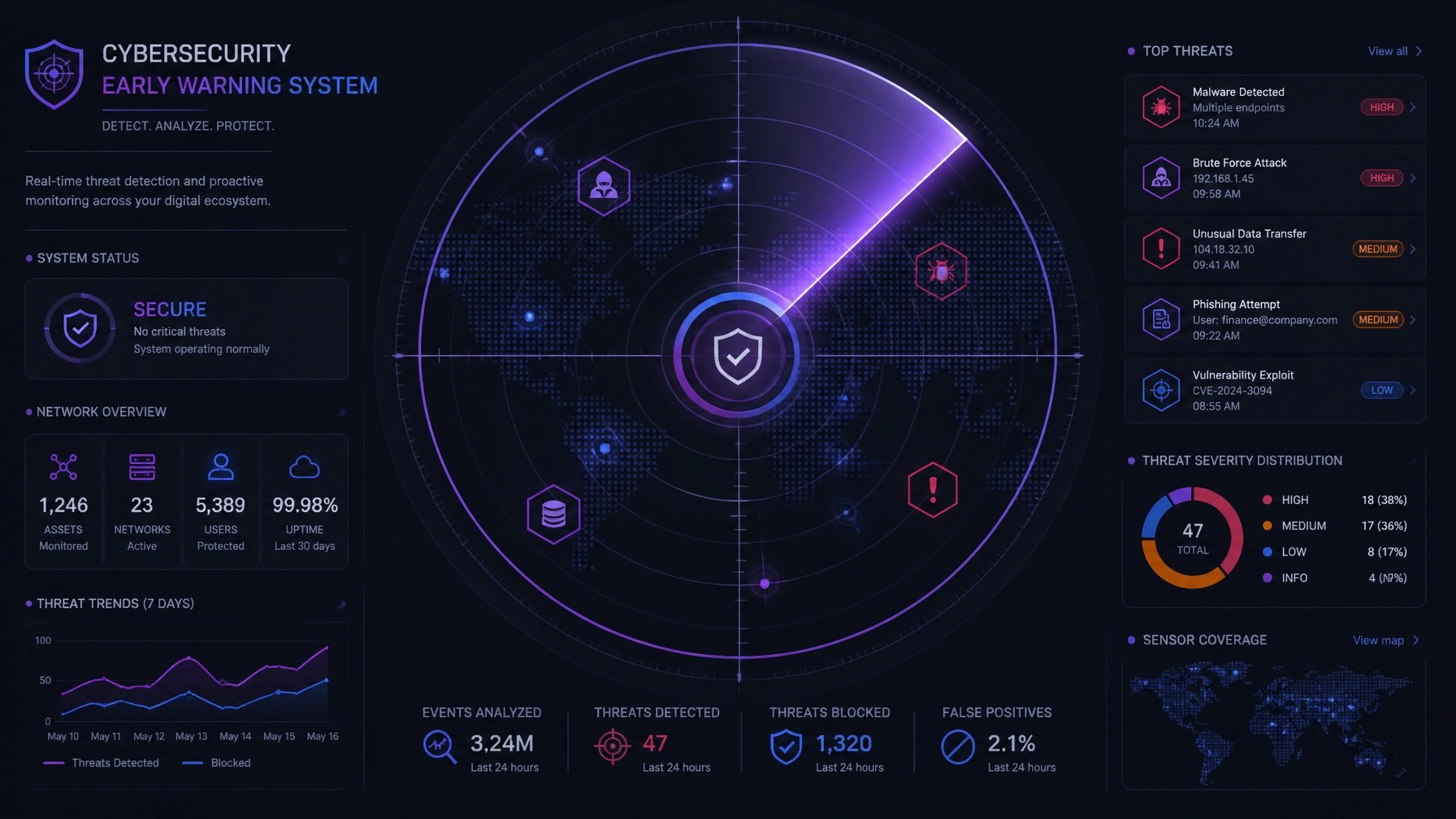
The goal of EASM is to compress the "time-to-remediation." In cybersecurity, the window between a vulnerability appearing and an attacker exploiting it is shrinking every day.
Here is how EASM changes the game:
- Before an attacker finds an exposed S3 bucket: EASM identifies the misconfigured cloud storage and alerts your team to close it.
- Before a leaked credential is used for a breach: EASM flags the leak on a dark web forum, allowing you to force a password reset immediately.
- Before a forgotten cloud instance becomes a backdoor: EASM discovers the "orphaned" server and allows IT to decommission it or secure it.
Instead of waiting for a quarterly audit or a breach notification, your organization gains a cybersecurity early warning system. This proactive approach shifts the burden from the security team "guessing" where risks are, to the platform "identifying" exactly where the fire is starting.
Why This Matters for the Boardroom: Translating Risk to ROI
For CEOs and CFOs, EASM isn't just a "tech tool": it's a financial safeguard.
Security teams often speak in technical jargon (CVEs, ports, protocols). But the boardroom cares about Expected Annual Loss (EAL) and ROI.
When you use an EASM platform like Observeri, you aren't just looking at a list of IT problems. You are looking at a prioritized map of business risks. By automating the discovery and monitoring of your digital footprint, you can:
- Reduce Audit Cycles: Automate evidence collection for compliance frameworks like ISO 27001 or SOC 2.
- Minimize "Decision Velocity": Provide leadership with clear data on where to invest security budget for the highest impact.
- Quantify Exposure: Translate a technical vulnerability into a potential dollar-impact narrative.
The Observeri Difference: EASM Meets GRC
Most standalone EASM tools have a major flaw: they give you a massive list of problems but no way to manage the solution. They create "alert fatigue," where security teams are overwhelmed by thousands of notifications with no context.
Observeri takes a different approach. We believe that identifying a threat is only half the battle. Our platform connects EASM findings directly to your Governance, Risk, and Compliance (GRC) workflow.
- Automated Mapping: When a new asset is discovered, Observeri automatically maps it to your existing compliance controls.
- Financial Context: We use FAIR-style modeling to show you exactly how much an exposed asset could cost the company in a breach.
- Predictive Analytics: Our AI doesn't just look for today's bugs; it predicts potential breach points 30-90 days in advance.
By integrating EASM into a single, automated platform, Observeri helps enterprises move from spreadsheet-based guesswork to real-time risk visibility.

Conclusion: Stop Guessing, Start Monitoring
Your digital footprint is expanding every day. Every new cloud service your team uses, every API they connect to, and every new subdomain they launch increases your attack surface.
You cannot protect what you cannot see.
External Attack Surface Management is the only way to ensure that your organization remains a "hard target." By continuously discovering your assets and fixing exposures before they occur, you aren't just checking a compliance box: you are building a resilient, proactive enterprise.
Ready to see your digital footprint from an attacker’s perspective? Explore Observeri’s AI-powered GRC and Attack Surface platform today.
Leave a Reply