





Top Cyber Risk Quantification Software of 2026: A Buyer’s Guide to Measuring Cyber Exposure in Dollars
In 2026, the era of the "red-amber-green" heat map is officially over. For years, CISOs and security teams communicated risk through abstract scores and qualitative labels that left CEOs and CFOs guessing about actual business impact. Today, that ambiguity is a liability.
Boards no longer ask "Are we secure?" They ask "What is our Expected Annual Loss (EAL) in dollars, and how much will this $2M investment reduce it?"
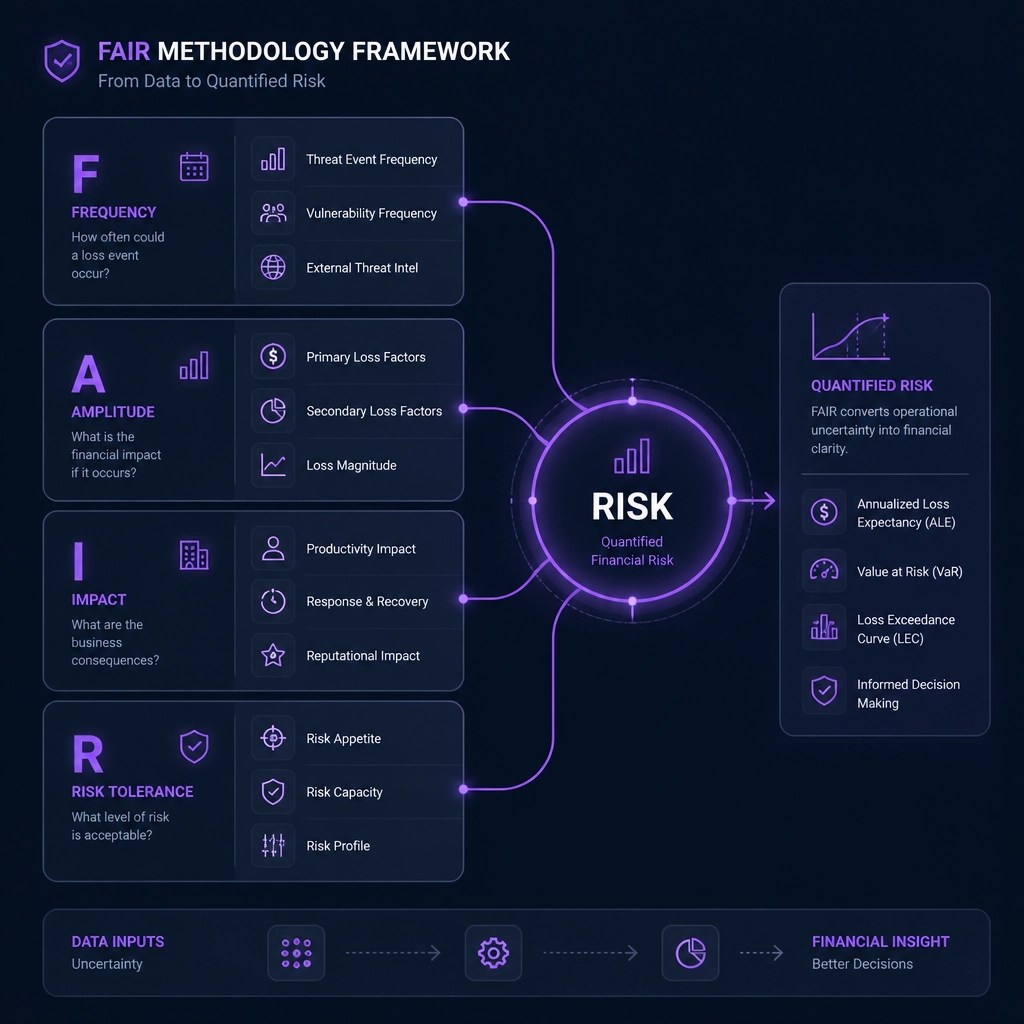
According to recent market data, adoption of the Factor Analysis of Information Risk (FAIR) methodology has surged to 58%, up from 46% just a year ago. Enterprises are shifting toward Cyber Risk Quantification (CRQ) software not just for compliance, but to drive "Decision Velocity": the ability to make rapid, data-backed choices on where to allocate capital and where to accept exposure.
This guide provides a neutral, comprehensive look at the leading CRQ platforms of 2026, helping you navigate a market that has transitioned from reactive reporting to predictive, automated financial modeling.
Why Cyber Risk Quantification (CRQ) is the Standard in 2026
The shift to CRQ is driven by three primary forces:
- Regulatory Pressure: New disclosure requirements in the US, EU, and UAE (including updated NESA and DESC standards) require organizations to quantify the material impact of cyber risks.
- Cyber Insurance Hardening: Underwriters now demand actuarial-grade data. Without a quantitative model, premiums soar and coverage shrinks.
- Budget Justification: In a high-interest-rate environment, every security dollar must prove a return. CRQ allows security teams to demonstrate a 12–27x ROI by focusing remediation on the risks with the highest dollar impact.

The Top 10 Cyber Risk Quantification Platforms of 2026
The following platforms represent the current state-of-the-art in CRQ. This list is organized alphabetically to provide a neutral comparison of their unique strengths and technological approaches.
1. Axio
Axio remains a powerhouse for organizations that prioritize scenario-based modeling. It is particularly strong for board-level reporting and insurance benchmarking. Axio 360 allows users to run complex "what-if" scenarios, helping leadership understand how specific investments: like a new identity provider: directly lower their financial exposure.
- Best for: Board communications, insurance optimization, and ERM integration.
2. Balbix
Balbix stands out for its technical depth and continuous asset discovery. By ingesting telemetry directly from your IT environment, Balbix provides a real-time, bottom-up view of risk. It excels at translating technical vulnerabilities into dollar-based exposure, making it a favorite for security operations teams that need to prioritize thousands of daily alerts based on business value.
- Best for: Technical security teams and continuous exposure management.
3. Black Kite
Focusing on the external attack surface, Black Kite is the leader for third-party risk quantification. It uses a non-intrusive approach to scan vendor footprints and provides FAIR-aligned financial risk estimates. For M&A due diligence or managing a complex supply chain, Black Kite offers immediate visibility into the financial "hidden debt" of third-party partners.
- Best for: Third-party risk management (TPRM) and M&A due diligence.
4. Cordaata
Cordaata provides a tightly integrated CRQ and GRC solution. It utilizes FAIR and Monte Carlo simulations to give a high-fidelity view of risk. By combining risk quantification directly with governance workflows, it ensures that when a risk is identified in dollars, the remediation task is automatically assigned and tracked within the same system.
- Best for: Mid-to-large enterprises seeking a unified CRQ and GRC experience.
5. CyberSaint / CyberStrong
CyberSaint is the compliance-first leader in the space. It maps controls from frameworks like NIST CSF, ISO 27001, and SOC 2 directly to financial risk. This "crosswalk" capability allows organizations to see exactly how a gap in compliance translates to a specific dollar increase in Expected Annual Loss.
- Best for: Compliance-heavy industries (Healthcare, Banking) and NIST-aligned organizations.
6. Kovrr
With deep roots in the insurance industry, Kovrr offers actuarial-grade modeling. It is famous for its 25,000-trial Monte Carlo simulations per quantification, providing a probabilistic distribution of loss that satisfies even the most rigorous CFO or actuary. It is particularly adept at modeling "catastrophe" style events like large-scale data breaches or systemic outages.
- Best for: Financial services, insurance underwriting, and high-fidelity probabilistic modeling.
7. LogicGate Risk Cloud
LogicGate offers the most flexible workflow engine in the category. Their Risk Cloud platform incorporates Open FAIR standards but allows users to customize the data collection and approval processes to fit their existing business logic. It’s ideal for organizations that have unique internal risk processes that don’t fit into a "one-size-fits-all" tool.
- Best for: Organizations requiring high customization and flexible GRC workflows.
8. Observeri
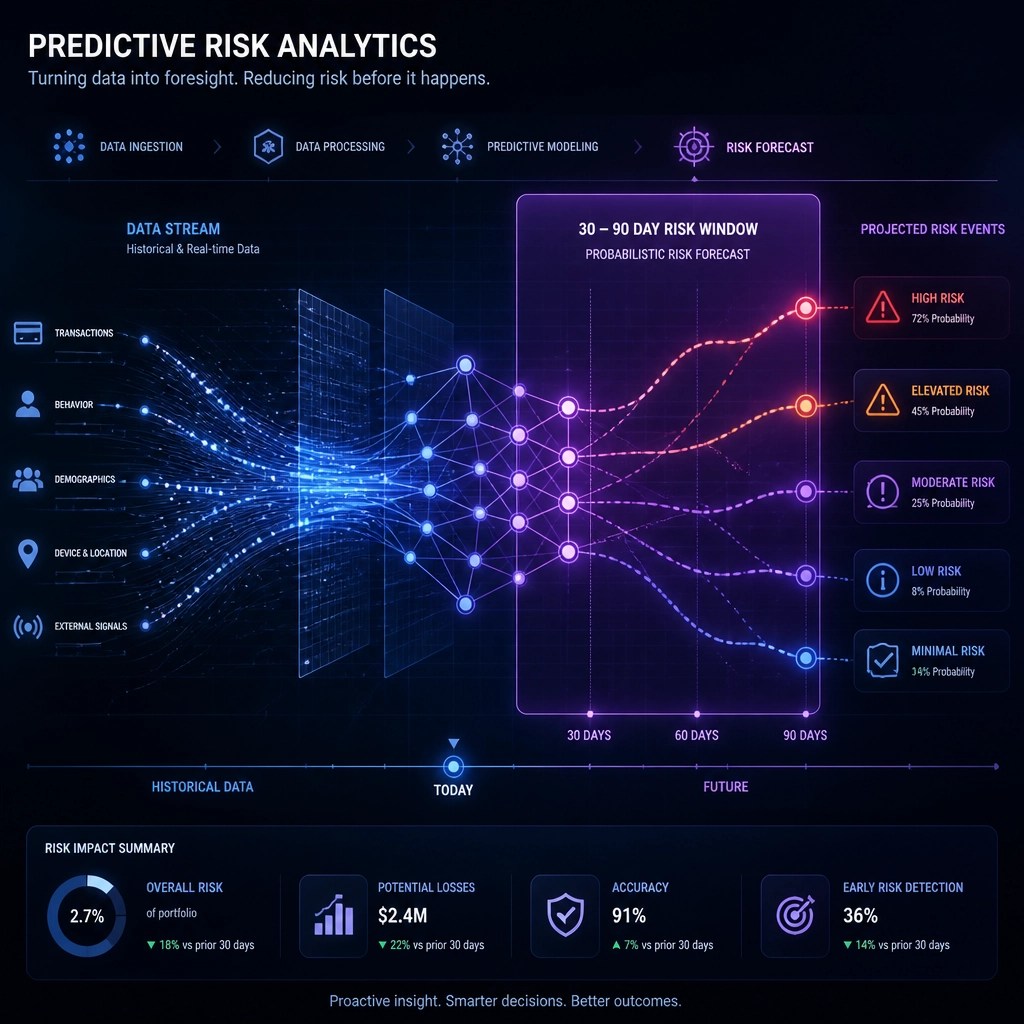
Observeri has carved out a niche as the leader in Predictive Risk Analytics. While most CRQ tools look at current state, Observeri uses AI to forecast potential breaches 30–90 days in advance. By integrating Attack Surface Management (ASM), dark web monitoring, and internal GRC data, it produces a FAIR-style EAL that is forward-looking. This "pre-emptive" approach helps CISOs move from firefighting to strategic prevention.
- Best for: Predictive accuracy, boardroom-ready narratives, and integrated AI-powered GRC.
9. Safe Security
Following its acquisition of RiskLens, Safe Security is the undisputed market leader for automated enterprise CRQ. The platform (SAFE One) is the gold standard for FAIR alignment, combining the methodology's rigor with deep telemetry integrations across 50+ security tools. It uses agentic AI to not only quantify risk but also suggest the most cost-effective remediation paths.
- Best for: Large-scale global enterprises requiring the industry-standard FAIR implementation.
10. Theodolite / vCSO.ai
Theodolite is a cloud-native platform that integrates seamlessly with CSPM and DSPM tools. It is designed for the modern, cloud-first enterprise that needs to understand risk at the data-object level. It provides a unified view of risk across multi-cloud environments, using Monte Carlo modeling to simulate data loss scenarios in AWS, Azure, and GCP.
- Best for: Cloud-native organizations and data-heavy tech companies.
Critical Selection Criteria for 2026
When evaluating these platforms, prioritize the following three dimensions to ensure you aren't just buying another dashboard, but a strategic asset.
1. FAIR Framework Alignment
FAIR is the international standard. Any platform you choose should, at a minimum, support the FAIR input model (Threat Event Frequency, Vulnerability, and Loss Magnitude). Avoid tools that use "black box" algorithms where you cannot audit the math.
2. Automation vs. Manual Input
The biggest failure of early CRQ programs was the "Excel trap": manually chasing data owners for inputs. Modern platforms should automate data ingestion from your CMDB, vulnerability scanners, and EDR tools. In 2026, if you are still manually entering "Threat Frequency," you are already behind.
3. Predictive vs. Reactive Analytics
Reactive CRQ tells you how much money you might have lost yesterday. Predictive CRQ, like the models used by Observeri and Safe Security, uses signal-driven data to tell you where you are likely to lose money tomorrow. This shift is what truly enables "Proactive Security."
Conclusion: Matching Maturity to the Platform
Choosing the right CRQ software depends on your organizational maturity:
- Starting Out: If you are just beginning to move away from heat maps, a compliance-focused tool like CyberSaint or a scenario-based tool like Axio can provide a soft landing.
- High Complexity: For massive, global environments, the automation and rigor of Safe Security or the actuarial depth of Kovrr are necessary.
- Predictive Edge: If your goal is to stay ahead of the threat curve and provide the most accurate forecasts to the board, Observeri’s predictive AI offers a significant differentiator.
Cyber risk is no longer a technical problem to be solved; it is a financial risk to be managed. By quantifying that risk in dollars, you transform the security department from a cost center into a strategic advisor that drives business value and protects the bottom line.