





Technical Vulnerabilities vs. Business Impact: Why CVSS Scores Aren’t Enough Anymore
For the modern CISO, the "Critical" alert has lost its meaning.
In an era where thousands of new vulnerabilities are disclosed every month, the Common Vulnerability Scoring System (CVSS) has become a double-edged sword. While it provides a standardized language for technical severity, it lacks the one thing that matters most to the boardroom: business context.
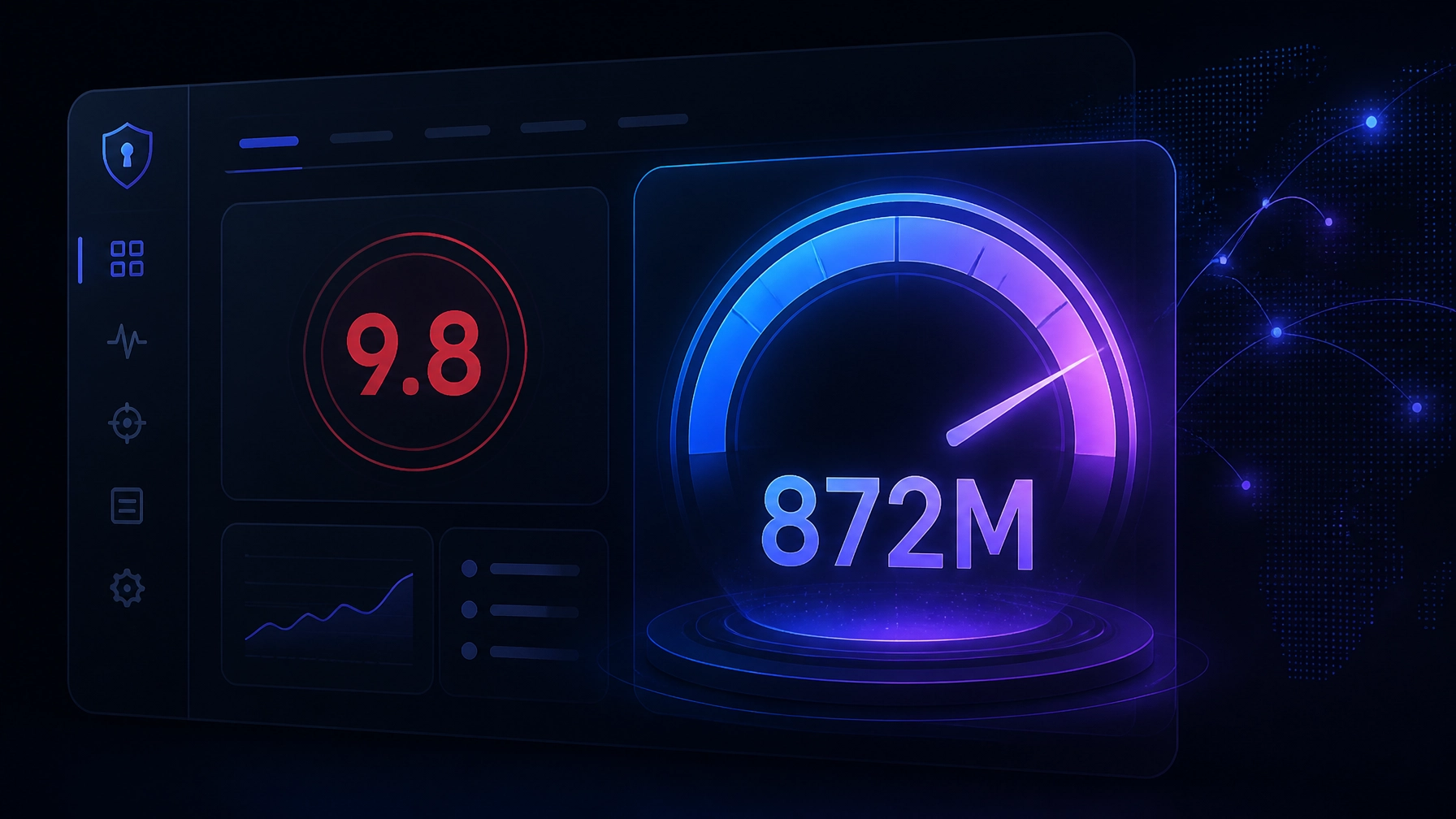
Relying solely on CVSS scores to prioritize remediation is a recipe for operational paralysis and executive burnout. When every "9.8" is treated with the same urgency, resources are misallocated, security teams are overwhelmed, and the most dangerous risks: those that actually impact the bottom line: often hide in plain sight.
It’s time to shift from technical severity to quantified business risk.
The CVSS Trap: Severity is Not Risk
The fundamental flaw in traditional vulnerability management is the conflation of severity and risk.
CVSS measures the technical qualities of a vulnerability: how easy it is to exploit and what kind of technical damage it can do. It assumes a neutral environment. It doesn't know if that vulnerability is sitting on an air-gapped printer in a branch office or on the primary database housing your customer's financial records.
The Problem of "Everything is Critical"
Most enterprises are drowning in "Critical" and "High" CVEs. According to recent industry data, a typical enterprise may have tens of thousands of open vulnerabilities. Attempting to patch them based on score alone leads to:
- CISO Burnout: Security leaders are held accountable for "reducing the number of criticals," a metric that never seems to go down despite heroic efforts from their teams.
- Misallocated Resources: Teams spend weeks patching a CVSS 9.8 on a low-priority internal system while ignoring a CVSS 6.5 on a customer-facing portal that serves as a gateway to the entire network.
- The Compliance Mirage: You might hit your "patching SLAs" and satisfy an auditor, but your actual exposure to a material financial loss remains unchanged.

Case Study: The $872 Million Blind Spot
The 2024 cyberattack on Change Healthcare (a subsidiary of UnitedHealth Group) serves as a stark warning of what happens when technical gaps are viewed in isolation from business impact.
The initial access vector wasn't a sophisticated 0-day or a CVSS 10.0 exploit. It was a single Citrix remote access portal that did not have multi-factor authentication (MFA) enabled.
From a technical perspective, "missing MFA" might not even register as a high-scoring CVE in a traditional scanner. However, the business impact was catastrophic:
- $872 Million in Q1 2024 losses alone, including direct remediation and business disruption.
- Disruption of systems processing roughly 40% of all U.S. healthcare claims.
- A total projected cost reaching as high as $3.1 billion.
In a risk-based model, that unprotected portal would have been flagged as a "Maximum Risk" asset, regardless of whether a specific CVE score was attached to it. It was a single point of entry into a crown-jewel system.
Bridging the Gap: Contextual Prioritization
To avoid the next multi-million dollar disaster, organizations must move beyond the "base score." At Observeri, we advocate for a prioritization model that factors in four critical dimensions:
1. Asset Criticality (The "Crown Jewels")
Not all servers are created equal. A vulnerability on a server that handles real-time payments is infinitely more dangerous than the same vulnerability on a development test-bed. You must map your vulnerabilities to the business value of the underlying asset.
2. Real-World Exploitability
Is there a public exploit kit available? Is the vulnerability being actively exploited by ransomware groups in the wild? Using predictive cyber risk analytics, you can identify the 5% of vulnerabilities that are actually likely to be used against you, rather than the 95% that are theoretically possible but practically inert.
3. Exposure and Attack Surface
Is the asset internet-facing? Is it protected by compensating controls like WAFs, segmentation, or EDR? A CVSS 10 behind three layers of network segmentation is often less urgent than a CVSS 7 exposed to the public web.
4. Regulatory and Financial Exposure
What is the cost of downtime? What are the potential GDPR or HIPAA fines if this data is leaked? This is where technical data transforms into a business narrative.

Quantifying Risk in Dollars, Not Scores
The "Decision Velocity" of a C-suite executive depends on their ability to understand the financial stakes. Technical jargon like "buffer overflow" or "remote code execution" doesn't move the needle in a board meeting. Expected Annual Loss (EAL) does.
By using FAIR-style (Factor Analysis of Information Risk) modeling, Observeri’s cyber risk quantification software translates technical vulnerability data into financial terms.
Instead of telling your CFO: "We have 450 critical vulnerabilities," you can say: "Our current exposure in the payment gateway represents an expected cyber loss of $4.2M over the next 12 months. Investing $200k in remediation will reduce that exposure by 85%."
This shift does three things:
- Justifies Budget: It turns security from a "cost center" into a risk-management function with a clear ROI.
- Ends the "Patch Everything" Myth: It gives the CISO a defensible reason to defer low-risk vulnerabilities, directly reducing team burnout.
- Aligns with Business Goals: Security becomes a partner in protecting revenue, not a hurdle to innovation.

How Observeri Solves the Prioritization Crisis
Observeri is built to replace the manual, spreadsheet-based chaos of traditional GRC with an AI-powered workflow that focuses on what matters.
- Continuous Compliance Mapping: We don't just find vulnerabilities; we map them to frameworks like ISO 27001, NIST CSF, and HIPAA to ensure you stay compliant while staying secure.
- Predictive Risk Analytics: Our platform uses AI to predict potential breaches 30-90 days in advance by analyzing patterns in exploitability and asset exposure.
- Vulnerability Prioritization Tool: We automatically contextualize every finding based on business value, exploitability, and existing controls.
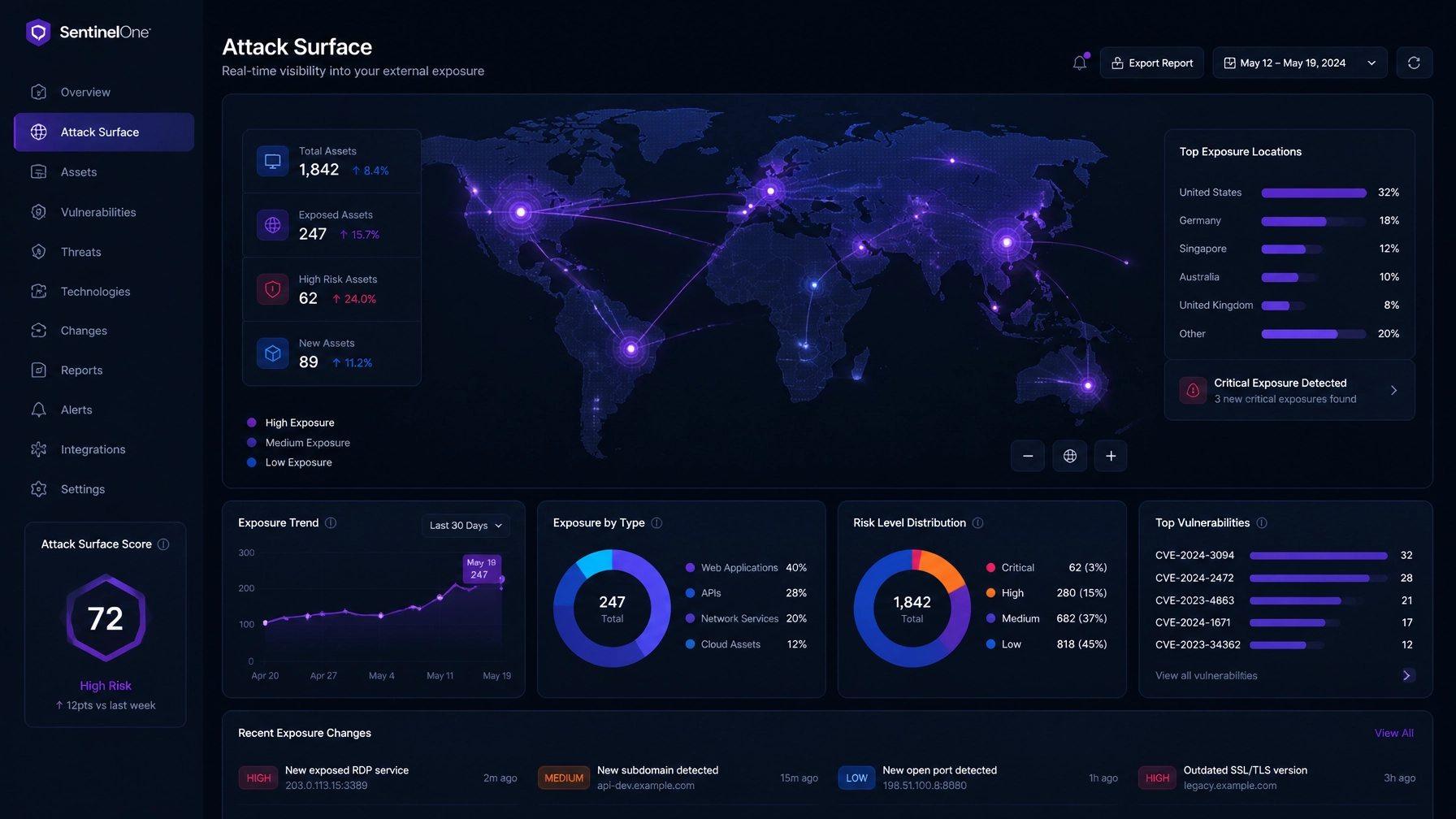
- The Cyber Risk Dashboard: A single source of truth for the CEO, CFO, and CISO, showing real-time risk visibility and financial impact.
| Feature | Traditional Vulnerability Management | Observeri GRC Platform |
|---|---|---|
| Primary Metric | CVSS Base Score | Financial Risk (EAL) |
| Context | None (Asset agnostic) | Business Criticality + Asset Value |
| Speed | Reactive (Scan and Patch) | Predictive (30-90 day foresight) |
| Output | List of CVEs | Strategic Action Plan & ROI |
| Stakeholder Alignment | Security Team Only | C-Suite & Board Ready |
Conclusion: The High Cost of Inaction
Relying on CVSS is no longer a viable strategy for enterprises in regulated sectors. As the Change Healthcare incident proved, the gap between a "technical miss" and a "business catastrophe" is smaller than ever.
If your security team is drowning in alerts and your board is asking for the "dollar value" of your risk, it's time to change your approach. Stop counting vulnerabilities and start managing risk.
Ready to see your risk in dollars and cents?
Explore Observeri's Risk Quantification Software and discover how we provide 12-27X ROI in the first year by automating the path from technical noise to strategic clarity.
