






CISO Burnout vs. AI: How Asset-Level Risk Analysis Saves Your Sanity (and Budget)
The modern CISO is expected to be a magician. In 2026, the mandate is clear: protect a sprawling digital estate, comply with a shifting landscape of global regulations, and do it all with a budget that hasn’t kept pace with the threat actors' sophistication.
The result? A "burnout epidemic" where the average CISO tenure has shrunk to just 18 to 36 months. When you have 1,000 critical vulnerabilities but only enough resources to fix 10, the weight of the "unmitigated 990" becomes a source of chronic anxiety.
At Observeri, we believe the problem isn't a lack of effort: it's a lack of context. By shifting from a generic "vulnerability-first" approach to an Asset-Level Risk Analysis powered by AI, CISOs can finally stop firefighting and start leading.
The Flaw of "High, Medium, Low": Why Everything Feels Like a Fire
Legacy GRC and vulnerability management tools have failed the boardroom because they rely on qualitative labels. When a scanner flags 500 "High" vulnerabilities, it treats them all as equal risks.
In reality, they aren't.
A vulnerability on a public-facing billing server containing 100,000 customer credit card records is a catastrophic risk. That same vulnerability on a disconnected printer in a branch office is a rounding error. Yet, without Business Context, your team spends the same amount of time on both.
This "Priority Inflation" is the primary driver of resource exhaustion. It creates a perpetual state of emergency that burns out talent and leaves the most critical assets exposed.
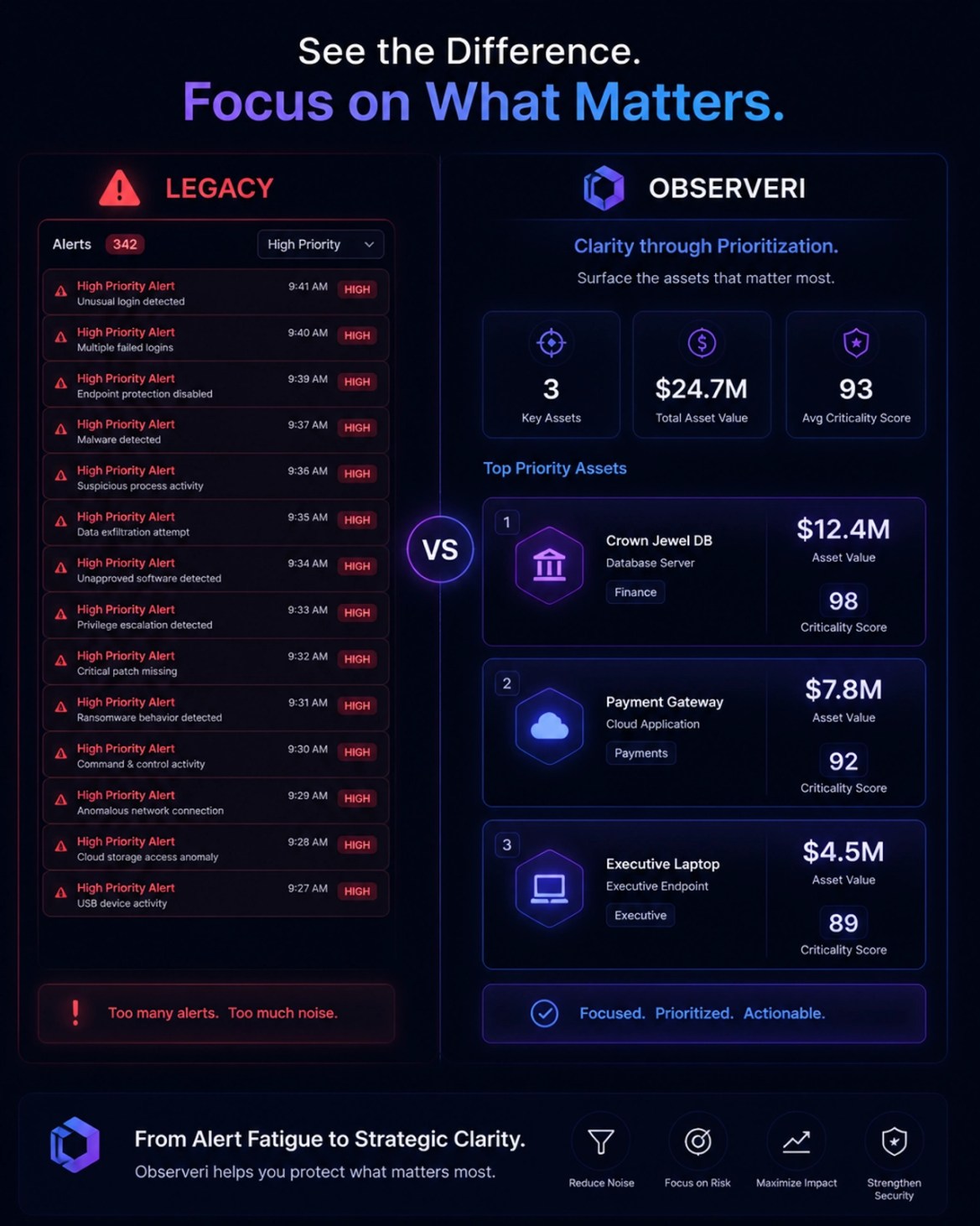
From Abstract Scores to Financial Reality: Expected Annual Loss (EAL)
To solve the resource gap, security must speak the language of the CFO. At Observeri, we replace abstract risk scores with Cyber Risk Quantification (CRQ) using FAIR-style modeling.
Instead of telling the board you have "Critical Risk," you tell them you have an Expected Annual Loss (EAL) of $4.2M tied to a specific business unit. This shift does three things for the CISO’s sanity:
- Justifies Budget: It’s easier to secure $200k for a tool when it’s proven to mitigate $2M in potential loss.
- Eliminates Guilt: When you focus on the top 5% of risks that represent 90% of the financial exposure, you can defensibly deprioritize the rest.
- Improves Decision Velocity: Stakeholders stop debating "what is critical" and start making decisions based on dollar impact.
By focusing on assets with high Asset Criticality Scores, Observeri customers typically see a 12-27X ROI in their first year. You aren't just doing more with less; you're doing the right things with what you have.
Predictive AI: Seeing the Breach Before It Happens
The most stressful part of the CISO role is the "Boom": the moment a breach occurs. Most tools are reactive, informing you of a problem only after it’s been discovered.
Observeri’s AI-powered GRC platform uses predictive analytics to provide a 30-90 day advance notice of potential breach points. By analyzing patterns in exploitability and asset vulnerability, the AI identifies where the "next fire" is likely to start.

This predictive window is a game-changer for resource management. Instead of pulling your team into a 2:00 AM emergency patch session, you can schedule remediation during normal business hours weeks in advance. This move from Reactive Fire-Fighting to Proactive Budgeting is the only sustainable way to manage a modern security program.
The Observeri "Insight Wheel": Integrating the Full Picture
Managing risk isn't just about finding bugs; it’s about governance and compliance. Many organizations struggle because their risk data is trapped in one silo, while their compliance evidence is in another.
Observeri’s integrated approach unifies these functions into a single workflow. As shown in our Insight Wheel, we map controls and evidence continuously for frameworks like ISO 27001, NIST CSF, and GDPR.

When asset risk is mapped directly to compliance requirements, the "manual spreadsheet work" that consumes so much of your team's time evaporates. Automation takes over the evidence collection, allowing your people to focus on high-value strategic work: the kind of work that keeps them engaged and prevents turnover.
3 Steps to Reclaim Your Security Strategy
If you are feeling the weight of limited resources, it’s time to change the operating reality of your department.
- Map Business Context First: Stop scanning and start cataloging. Which assets actually drive revenue? Which ones hold the "crown jewels"? Assigning an Asset Criticality Score is your first step to sanity.
- Quantify the Exposure: Use AI to translate technical vulnerabilities into Expected Annual Loss. If it doesn't move the financial needle, it shouldn't move your team.
- Automate the Mundane: Use an AI-powered platform like Observeri to handle the mapping of controls and evidence.
The Bottom Line: ROI and Resilience
In 2026, the role of the CISO is no longer just about "checking boxes." It is about managing financial risk and ensuring business continuity. By adopting an asset-level, risk-based approach, you move from being a cost center to a value protector.
Observeri provides the tools to compress audit cycles, predict breaches, and prioritize investments where they matter most. The result isn't just a more secure organization; it's a more sustainable career for the person at the helm.
Ready to see how Observeri can quantify your risk and reclaim your team's time? Explore our features or get in touch with our team today.