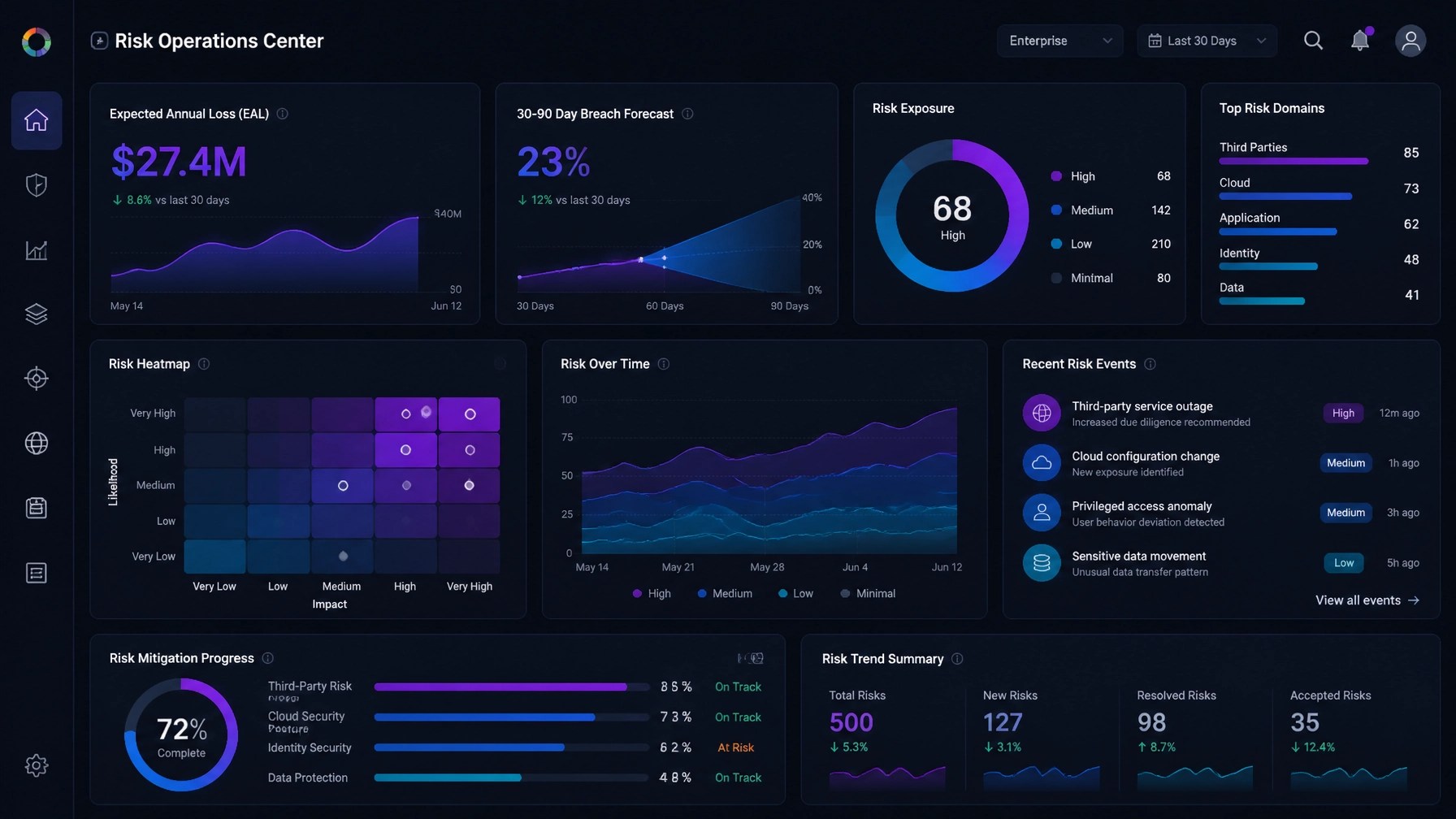
If you are still managing your enterprise risk on a spreadsheet, you aren’t managing risk: you’re managing a digital graveyard.
The traditional "Risk Register" has long been the industry’s open secret: a static, backward-looking document that sits in a folder until the week before an audit. It is a checkbox exercise that provides zero operational value and even less strategic insight. In a world where threats evolve in minutes, a quarterly updated Excel file is a liability.
Enter the Risk Operations Center (ROC).
The ROC isn't just a fancy name for a better dashboard; it’s a fundamental shift in how organizations govern, quantify, and mitigate cyber exposure. It is the evolution from "Are we compliant?" to "Where are we going to fail next, and how much will it cost us?"
The Death of the Spreadsheet: Why Static Registers Fail
The "Old Way" of GRC (Governance, Risk, and Compliance) is built on a foundation of manual data entry and subjective guesswork. When a CISO asks for a risk update, a team member typically spends days chasing asset owners, "guesstimating" impact levels as High, Medium, or Low, and manually updating a grid.
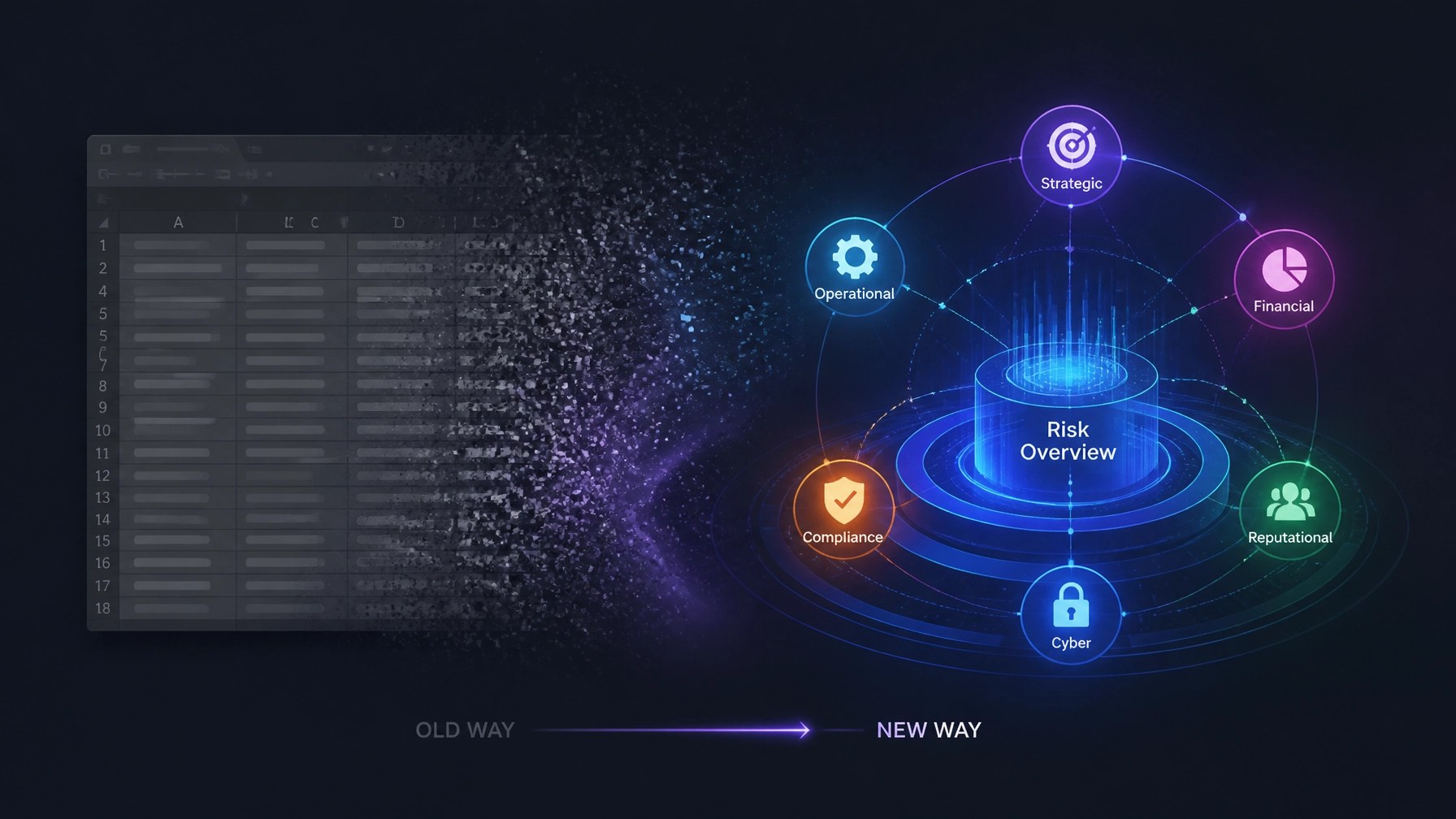
The flaws are structural and fatal:
- Stale Data: By the time a risk is logged, reviewed, and approved, the underlying technical environment has already changed.
- Siloed Intelligence: Spreadsheets don't "talk" to your SIEM, your vulnerability scanners, or your cloud configurations. They are disconnected from the reality of your network.
- Subjectivity vs. Science: "High Risk" means something different to a developer than it does to a CFO. Without a unified, data-driven language, communication breaks down.
- Boardroom Irrelevance: The board doesn't care about "Red/Amber/Green" charts. They care about financial exposure and strategic resilience. Static registers fail to provide either.
Defining the ROC: Your AI-Powered Command Center
The Risk Operations Center (ROC) is the centralized hub where AI continuously reasons over data from across your entire tech stack: information assets, threat intelligence, and control effectiveness.
Unlike a static register, an ROC is live. It functions like a SOC (Security Operations Center), but instead of looking for alerts, it looks for systemic risk. It integrates your exposure management, cyber risk quantification (CRQ), and compliance mapping into a single, automated workflow.
At Observeri, we’ve built the ROC to be the brain of the enterprise. It doesn’t just store risks; it operates them. It continuously ingests data from your environment, maps it against frameworks like ISO 27001 or NIST CSF, and recalculates your posture in real-time.
Predictive Intelligence: The 30-90 Day Advantage
The most significant differentiator of a modern ROC is the shift from reactive to predictive. Traditional GRC tells you what happened in the past. Observeri’s AI-powered ROC tells you what is about to happen.
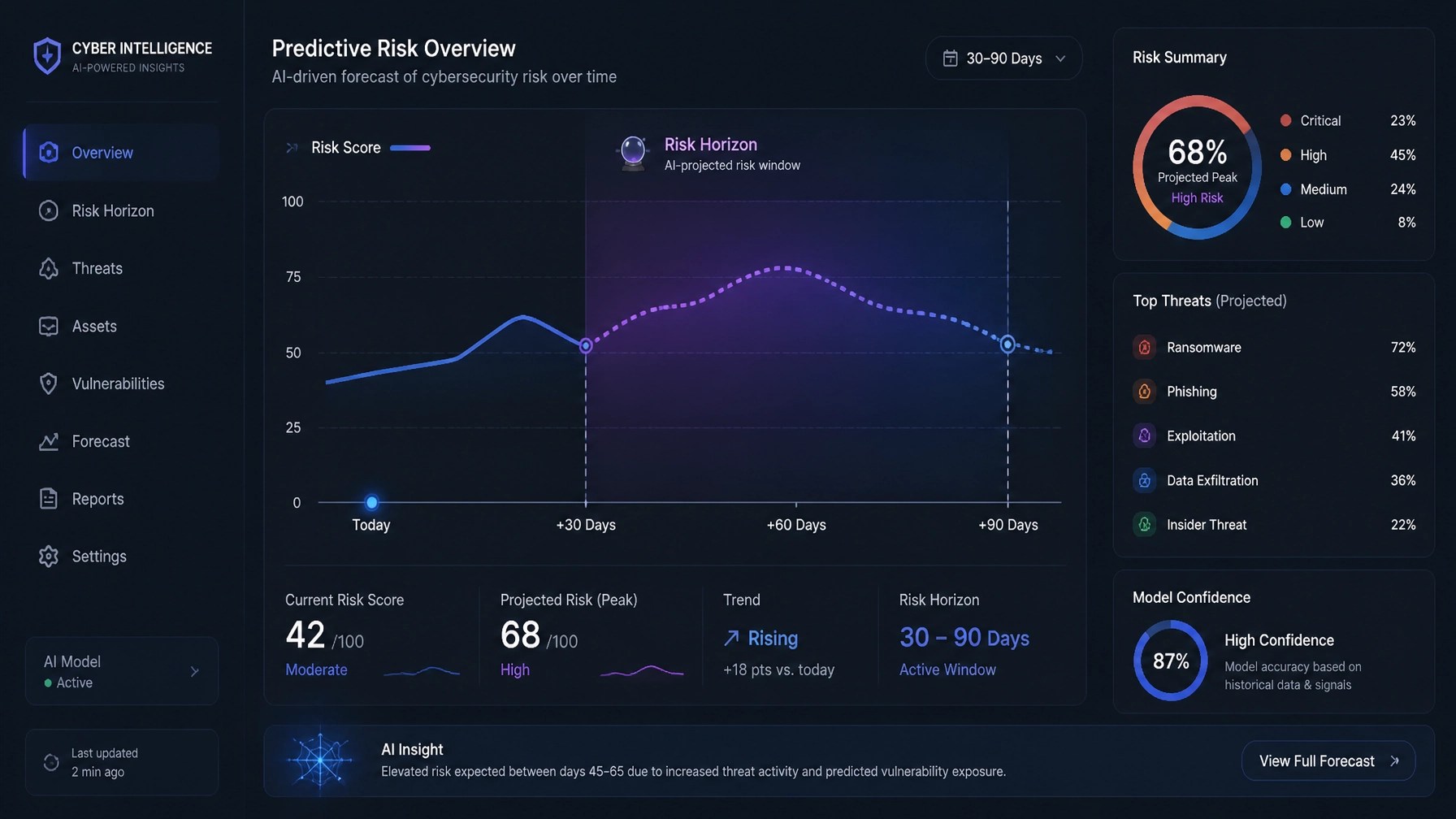
Using advanced predictive analytics, the ROC can forecast potential breaches 30 to 90 days in advance. By analyzing patterns in control failures, emerging threat vectors, and technical vulnerabilities, the system identifies the "weakest links" before an attacker does.
Imagine walking into a board meeting not with a list of historical incidents, but with a forecast of where the next failure is likely to occur: and a plan to prevent it. This "Decision Velocity" is what separates top-tier security leaders from the rest.
Kill the "High/Medium/Low" Jargon: Lead with Financial Language
The "kill shot" for getting executive buy-in has always been the language barrier. Technical teams talk about CVE scores; the C-suite talks about EBITDA and ROI.
The ROC bridges this gap through Cyber Risk Quantification (CRQ). Using FAIR-style modeling, Observeri translates abstract technical risks into a clear financial narrative: Expected Annual Loss (EAL).
| Legacy Risk Register | AI-Powered ROC (Observeri) |
|---|---|
| "High Risk" Vulnerability | $1.2M Expected Annual Loss (EAL) |
| "Compliant" (Manual Audit) | 94% Control Effectiveness (Real-Time) |
| Quarterly Manual Update | Continuous Data Ingestion |
| Reactive Response | 30-90 Day Predictive Breach Window |
When you can tell your CFO, "Remediating this specific set of vulnerabilities will reduce our financial exposure by $4.5M this quarter," the conversation changes from "budget request" to "strategic investment." Observeri typically delivers a 12-27X ROI in the first year by focusing remediation efforts on the risks that actually impact the bottom line.
AI Agents in Action: Beyond Detection to Remediation
A Risk Operations Center doesn't just find problems; it initiates the cure. Observeri utilizes Autonomous AI Agents that act as the connective tissue between risk identification and remediation.
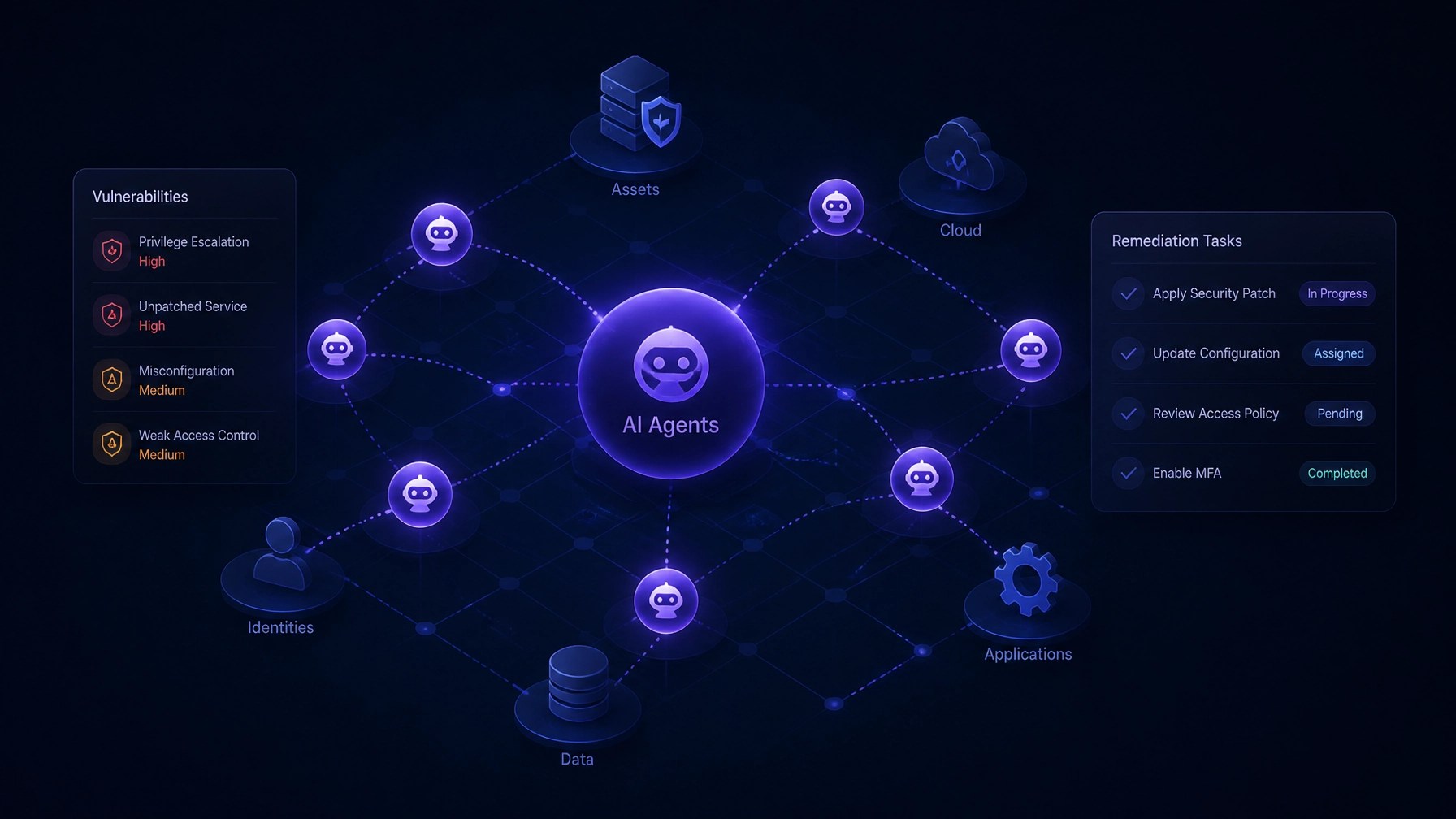
When the ROC detects a drift in compliance or a spike in risk, AI agents don't just send an email. They:
- Assign Remediation: Automatically create tickets in Jira or ServiceNow, assigned to the correct owner with the necessary context.
- Prioritize by Value: Sort the remediation queue based on the dollar impact (EAL) of the risk, not just the technical severity.
- Validate Fixes: Continuously check to ensure the control is back in place and functioning correctly before closing the loop.
This removes the "manual friction" that kills most GRC programs, compressing audit cycles and ensuring that compliance is a continuous state, not a seasonal event.
Middle East Context: Meeting UAE IA v2.1 and NESA Standards
For enterprises in the UAE and the wider Middle East, the shift to an ROC model is becoming a regulatory necessity. With frameworks like UAE IA v2.1 and NESA becoming more stringent, the cost of non-compliance is skyrocketing.
Regulators are no longer satisfied with a "point-in-time" audit. They are looking for evidence of a sustained, risk-based approach to security. In sectors like banking, fintech, and healthcare, non-compliance can result in penalties up to AED 5 million, not to mention the operational restrictions or license suspensions.
The Observeri ROC is designed to map controls across these specific regional frameworks automatically. It ensures that Priority One (P1) controls are always active and that your evidence library is continuously updated and ready for a NESA audit at any moment.

Conclusion: The ROI of Action
The transition from a manual risk register to an AI-powered Risk Operations Center is the difference between being a "check-box" administrator and a strategic business leader.
By automating the "grunt work" of compliance mapping and data collection, your team is freed to focus on what matters: reducing exposure and driving business value.
The Observeri Advantage:
- Compress Audit Cycles: From months to days.
- Predictive Security: 30-90 day breach forecasting.
- Financial Clarity: Quantify risk in dollars, not colors.
- Breakeven in 21 Days: Fast time-to-value for enterprise deployments.
Stop managing spreadsheets. Start operating risk. Book a demo with Observeri and see how the ROC can transform your security posture today.
Leave a Reply